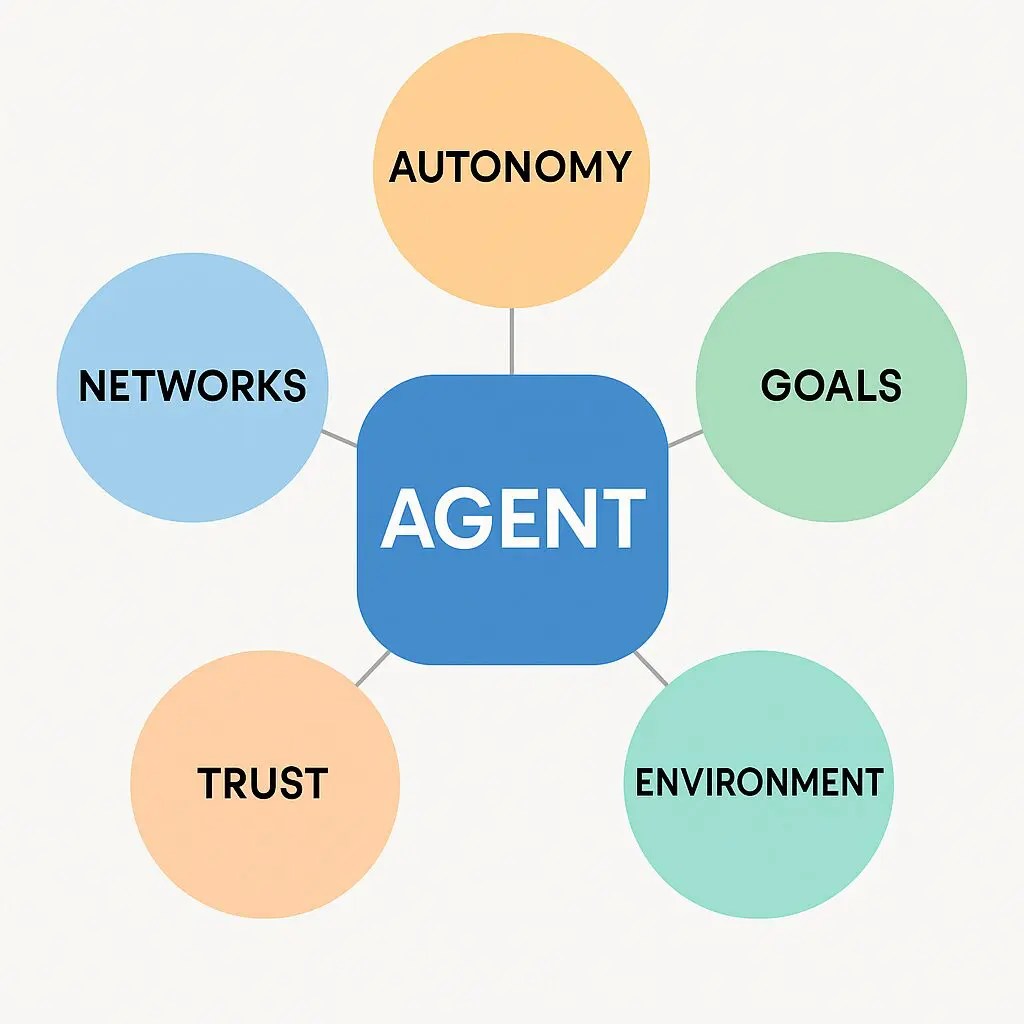
Pascal Bornet, in his book on Agentic AI, introduces the AGENT framework as a way to help organizations think about building, scaling, and managing artificial intelligence agents. The acronym serves as both a checklist and a philosophy for designing AI systems that are responsible, effective, and sustainable. Each letter represents one of the critical pillars that guide implementation.
We want to build reliable AI agents that deliver value. We can think of building an AI agent as hiring and training a new employee. You would clearly define their role, responsibilities, workflows, tools and rules. This also applies to AI agents but even more so because these AI agents require very detailed and specific instructions to function properly and effectively.
A – Autonomy
Agents should be empowered to operate independently within the scope of their role. Autonomy means minimizing unnecessary human micromanagement while still keeping appropriate safeguards in place. Well-designed autonomy frees up people’s time while allowing agents to learn, act, and adapt.
G – Goals
AI agents need clearly defined objectives. Goals provide direction, prevent wasted effort, and help align agent behavior with business strategy. Without specific goals, agents risk producing outputs that may be accurate but irrelevant.
E – Environment
An agent’s performance depends heavily on its environment — the data, tools, APIs, and systems it interacts with. A robust environment allows agents to gather reliable information, connect with other systems, and operate smoothly in real-world conditions.
N – Networks
No agent exists in isolation. Agents are most effective when they connect to networks of other agents, humans, and systems. Networks enable collaboration, coordination, and the sharing of knowledge. This is where multi-agent systems and human-AI teaming truly come alive.
T – Trust
Perhaps the most important element is trust. Users must trust that AI agents act ethically, handle data responsibly, and produce results that can be validated. Trust grows through transparency, explainability, and consistent performance over time.
Why the AGENT Framework Matters
The AGENT framework is not just a catchy acronym; it is a reminder that building AI agents requires balance. Too much autonomy without trust can be dangerous. Strong networks without clear goals may create confusion. By applying all five dimensions together, organizations can unlock the promise of agentic AI while staying grounded in responsibility and impact.