SWOT Analysis
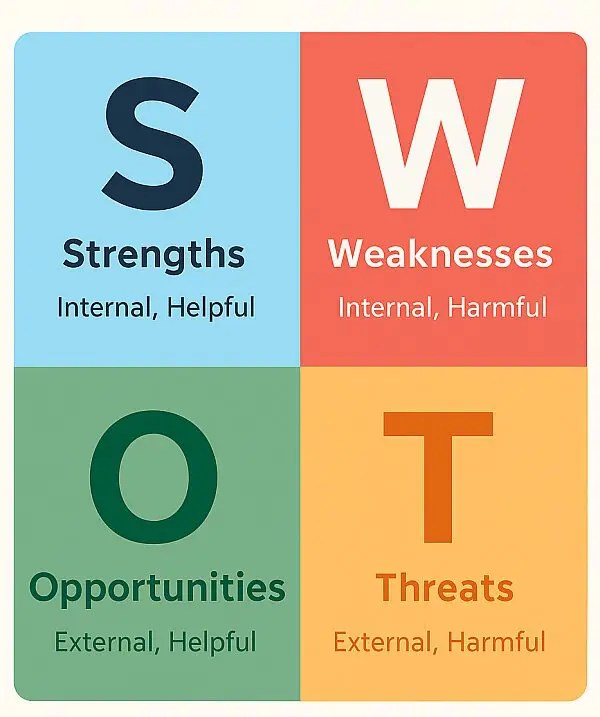
SWOT analysis is a classic strategic framework used to evaluate the internal and external factors that influence an organization, project, or initiative. The acronym stands for Strengths, Weaknesses, Opportunities, and Threats. It provides a balanced way to assess both what an organization does well and where it faces challenges — helping leaders and teams make more informed decisions.
The Four Dimensions of SWOT
- Strengths — Internal capabilities, assets, or qualities that give an organization an advantage. These might include skilled people, strong partnerships, trusted reputation, or innovative culture.
- Weaknesses — Internal limitations or areas that may hinder success. Examples include skill gaps, outdated systems, or lack of clear strategy.
- Opportunities — External trends or conditions that could be leveraged for growth or positive change. This might include new markets, technologies, partnerships, or funding sources.
- Threats — External risks or forces that could undermine success, such as competition, policy changes, or environmental factors.
How SWOT Supports Strategic Thinking
By examining these four areas, teams can better understand their current position and identify realistic paths forward. SWOT provides a structured lens for analysis and decision-making, often serving as a bridge between high-level vision and concrete action planning.
Importantly, SWOT works best when followed by deeper, action-oriented frameworks — such as Appreciative Inquiry, which expands on the “S” for Strengths and helps transform insight into inspiration and co-created change. In this way, SWOT and Appreciative Inquiry can be used together: one to clarify the landscape, and the other to mobilize people around what’s working and what’s possible.
Social Entrepreneurship
SWOT analysis can help organizations and communities map their assets, limitations, and external factors that shape impact. When paired with the strengths-focused lens of Appreciative Inquiry, it forms a powerful combination for collaborative planning — grounded in awareness yet oriented toward possibility and growth.