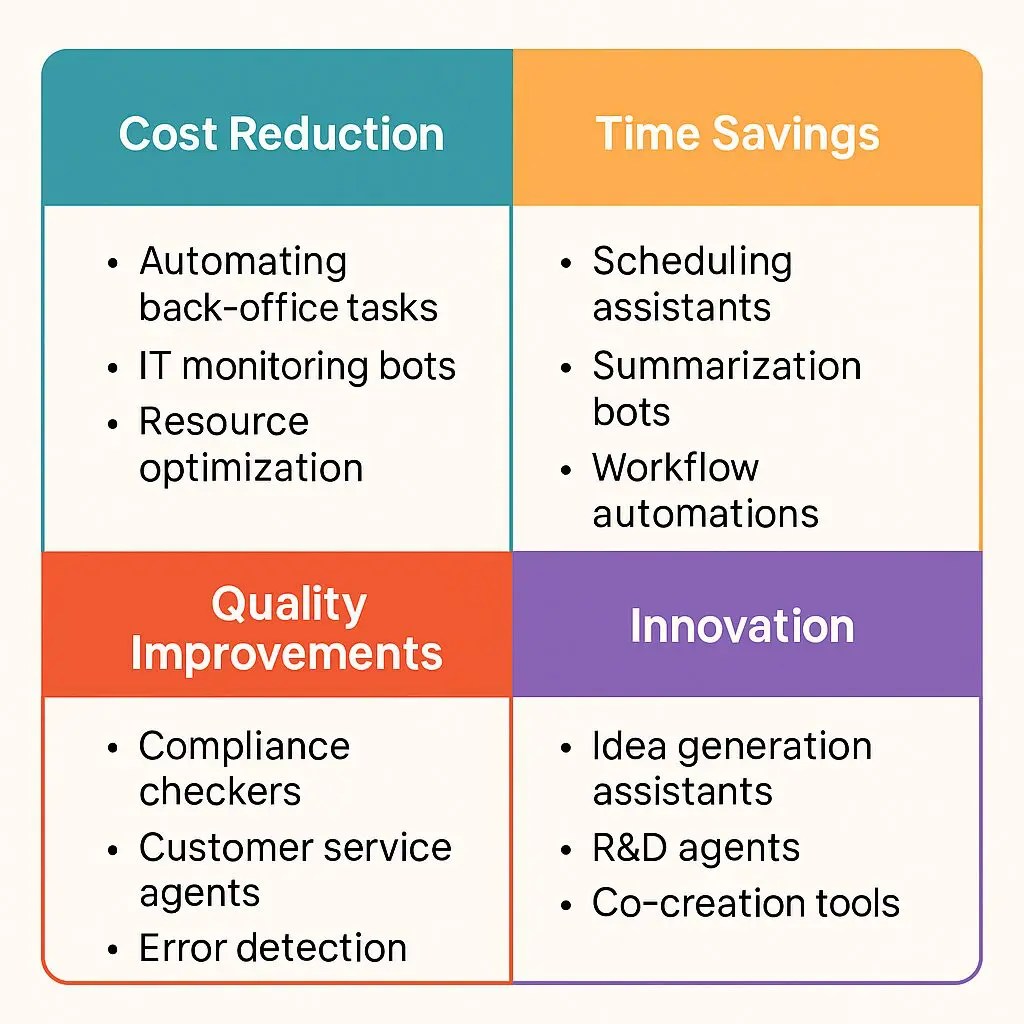
Another way to identify where agentic AI can make an impact is by looking at value creation. Instead of starting with industries, tasks, or departments, we can ask: what kind of value do we want AI to deliver? This lens helps leaders prioritize projects that align with strategic goals.
Cost Reduction
- Automating back-office tasks – reduce manual effort in payroll, invoicing, and data entry.
- IT monitoring bots – detect errors or downtime early to avoid expensive disruptions.
- Resource optimization – use AI agents to minimize waste and reduce energy usage.
Cost savings are the most straightforward and measurable value driver, making this a natural starting point for many organizations.
Time Savings
- Scheduling assistants – coordinate meetings, shifts, or appointments automatically.
- Summarization bots – condense long reports, emails, or meetings into digestible insights.
- Workflow automations – handle repetitive steps so teams can focus on higher-value work.
Time saved translates into increased productivity and frees employees for more creative or strategic contributions.
Quality Improvements
- Compliance checkers – ensure documents or processes meet regulatory standards.
- Customer service agents – deliver consistent responses and escalate exceptions effectively.
- Error detection – identify mistakes in manufacturing, data, or financial reports before they cause damage.
AI agents can reduce variability and errors, leading to more consistent quality across products and services.
Innovation
- Idea generation assistants – brainstorm new product features or marketing campaigns.
- R&D agents – explore emerging research, patents, and market trends.
- Co-creation tools – help teams experiment with new designs, simulations, or prototypes.
Innovation-focused agents go beyond efficiency to create entirely new value streams, enabling organizations to differentiate and grow.
Conclusion
Looking at opportunities through the value lens highlights why agentic AI matters: it can cut costs, save time, improve quality, and unlock innovation. Organizations should begin by clarifying which of these value areas is most important, then match AI projects to those goals. This approach ensures that agentic AI adoption aligns with strategy and delivers meaningful impact.